
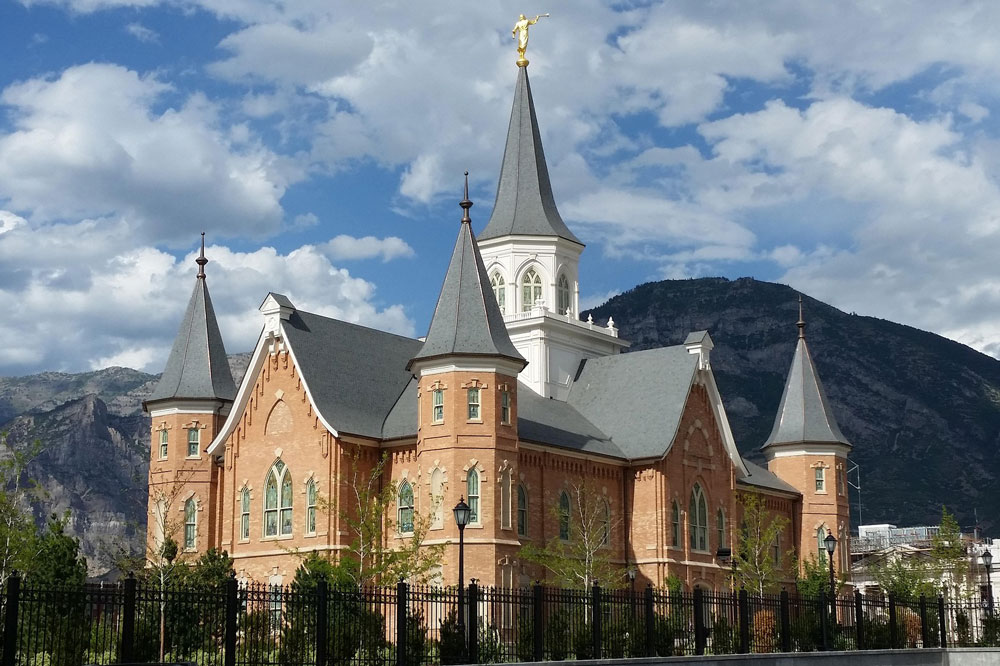
Armed church security volunteers in Utah operate in a uniquely permissive legal environment, but that freedom comes with significant responsibility. Utah’s combination of statewide firearm preemption, permitless carry, and volunteer-immunity statutes creates a framework in which churches may lawfully authorize armed volunteers—yet remain fully accountable for how those volunteers are selected, trained, supervised, and integrated into the church’s broader duty of care. This article provides a clear, defensible overview of the regulatory landscape, liability considerations, training expectations, and documentation standards that faith-based organizations must understand to build a safe, compliant, and legally sustainable armed-volunteer program.
Regulatory, compliance, training, documentation, and liability framework
1. Core legal framework for firearms in Utah
- State preemption: Utah occupies “the whole field” of firearm regulation; local governments generally cannot add their own firearm rules beyond what state law allows. This means churches operate under a uniform statewide framework, with private-property rights preserved and not expanded or restricted by the firearm-preemption statutes.
- Permitless carry: Since HB 601(effective May 5, 2021), any person at least 21 who may lawfully possess a firearm may carry a concealed firearm in public without a permit, subject to specific restricted locations. Utah’s Concealed Firearm Permit (CFP) still exists for reciprocity, school-zone carry, and other benefits, and requires a BCI-certified firearms-familiarity course.
For churches, this means: by default, lawful adults may carry concealed firearms unless the location is otherwise restricted by statute or by valid notice under the “house of worship” provisions.
2. Firearms in houses of worship
2.1 Trespass with a firearm in a house of worship
Utah Code § 76-10-5302 makes it an infraction to knowingly and intentionally bring or remain with a firearm in a house of worship or private residence after notice has been given that firearms are prohibited.
- Who is covered: The statute applies even to individuals licensed under the Concealed Firearm Act.
- Prohibited conduct:
- Transporting a firearm into a house of worship; or
- Entering or remaining in a house of worship while in possession of a firearm, after valid notice.
2.2 How a church gives valid notice
Notice that firearms are prohibited may be given by any of the following methods:
- Personal communication by the church or someone with authority.
- Posting signs reasonably likely to come to the attention of persons entering.
- Announcement in a regular congregational meeting.
- Publication in a bulletin, newsletter, worship program, or similar document.
- Publication in a newspaper of general circulation in the county, following statutory publication rules.
If a church uses the announcement/publication methods, it must notify the state division (BCI) within 30 days; BCI then posts a list of churches that have given notice, and the notice remains effective for up to one year unless revoked.
2.3 Definition of “house of worship”
“House of worship” is defined as a building set apart primarily for worship where religious services are held and whose main body is kept for that use and not put to inconsistent uses. This does not automatically include other church-owned properties (schools, offices, commercial properties, etc.), which are governed instead by general private-property and premises-liability principles.
For armed volunteers, this means:
- If your church has given notice prohibiting firearms, carrying inside the worship building is generally unlawful unless an exception is created by the church (e.g., designated security) under the statute’s allowance for exceptions.
- If your church has not given notice, lawful carriers (including volunteers) may carry, subject to church policy and general law.
2 Utah Code § 76-10-530 (2024) – Trespass with a firearm in a house of worship or private residence — Notice — Penalty. :: 2024 Utah Code :: U.S. Codes and Statutes :: U.S. Law :: Justia
Page 2 of 7
3. Volunteer status, immunity, and church liability
3.1 Volunteer immunity
Utah’s Liability Protection for Volunteers statute (Utah Code § 78B-4-1023) provides that a volunteer for a nonprofit organization generally does not incur personal legal liability for acts or omissions while providing services if:
- The volunteer acted in good faith and reasonably believed they were acting within the scope of their official functions and duties; and
- The damage or injury was not caused by intentional, illegal, willful, or wanton misconduct.
However, immunity does not apply when:
- The injury results from operation of a motor vehicle, vessel, aircraft, or other licensed vehicle;
- A government enforcement action is brought; or
- The nonprofit fails to provide a “financially secure source of recovery” (e.g., adequate insurance or qualified trust).
The statute also clarifies that:
- Granting immunity to volunteers does not eliminate the nonprofit’s own liability; the organization can still be sued.
- The nonprofit is not required by law to provide a financially secure source of recovery, but if it does not, volunteer immunity may not apply.
For armed church security volunteers, this means:
- Personal immunity is possible but not guaranteed; intentional or reckless use of force, or lack of insurance, can pierce that protection.
- The church itself remains exposed to claims for negligent selection, training, supervision, or policy failures.
4. Duty of care and premises liability for churches
4.1 Visitor status and duty of care
Under Utah premises-liability principles, visitors are generally classified as invitees, licensees, or trespassers, with different duties of care owed:
- Invitees: Those on the property for the owner’s benefit (e.g., congregants, guests at services or events). Owners owe the highest duty of care, including reasonable inspection, maintenance, and warnings of hazards.
- Licensees: Social guests or others present with permission but not for the owner’s business benefit. Owners must warn of known, non-obvious dangers and avoid creating hazards.
- Trespassers: Generally owed minimal duty, except not to intentionally harm them; special rules may apply to children.
Church attendees and most ministry participants will typically be treated as invitees, meaning the church must take reasonable steps to maintain a safe environment and address foreseeable risks, including security threats and the conduct of its own volunteers.
4.2 Premises liability and negligence exposure
Premises-liability claims in Utah generally require proof that:
- The property owner owed a duty of care;
- The owner breached that duty by acting negligently (e.g., failing to implement reasonable safety measures, failing to supervise armed volunteers, ignoring known risks);
- The breach caused the injury; and
- The plaintiff suffered damages.
For an armed church security team, foreseeable-risk issues can include:
- Poorly screened or untrained armed volunteers;
- Lack of clear use-of-force policy;
- No coordination with law enforcement;
- Failure to manage crossfire, bystander risk, or crowd-control issues;
- Inconsistent enforcement of firearm rules (e.g., some volunteers allowed to carry without documentation or oversight).
5. Regulatory and compliance considerations for armed church volunteers
5.1 Firearms and carry status
Key compliance points for a Utah church using armed volunteers:
- Permitless carry baseline: Adults 21+ who can lawfully possess a firearm may carry concealed without a permit in most public areas.
- CFP advantages: A Utah CFP still provides benefits (reciprocity, school-zone carry, background-check fee waiver) and requires a BCI-certified training course, which can serve as a baseline competency standard for volunteers.
- House of worship notice: If the church has given statutory notice prohibiting firearms, it must decide whether to:
- Revoke that notice; or
- Maintain the prohibition but create explicit exceptions for designated security personnel, as allowed by § 76-10-530(3).
- Signage and communication: Even where not strictly required, clear signage and written communication to congregants and volunteers help demonstrate reasonable care and reduce confusion.
5.2 Volunteer and insurance alignment
Given Utah’s volunteer-immunity framework, a church should:
- Confirm that its general liability and umbrella policies cover firearm-related incidents and volunteer security activities (and do not exclude them).
- Ensure it qualifies as providing a “financially secure source of recovery” if it wants volunteers to benefit from statutory immunity (adequate insurance limits or qualified trust).
- Coordinate with its insurer on:
- Required training standards;
- Documentation expectations;
- Incident-reporting procedures;
- Any endorsements or exclusions related to armed security.
6. Training, documentation, and best-practice framework
While Utah law does not prescribe a specific training curriculum for church security volunteers, the combination of premises-liability, volunteer-immunity, and firearms statutes strongly supports a robust, documented program.
6.1 Policy and governance
A defensible armed-volunteer program should include:
- Written firearms and security policy:
- Who may carry (e.g., only designated team members).
- Required qualifications (e.g., CFP, background check, prior experience).
- Use-of-force standards aligned with Utah self-defense law (reasonable belief of imminent unlawful force, serious bodily injury, or forcible felony).
- Coordination with law enforcement and emergency responders.
- Role definitions:
- Clear distinction between greeters, ushers, medical volunteers, and armed security.
- Chain of command and decision-making authority during incidents.
- House of worship notice alignment:
- If firearms are generally prohibited, written exceptions for designated security personnel, consistent with § 76-10-530(3).
6.2 Training
Recommended training elements (to align with duty of care and reduce negligence exposure):
- Firearms proficiency:
- At least CFP-level familiarity training; many churches will reasonably require more (e.g., annual qualification, scenario-based drills).
- Use-of-force and Utah law:
- Understanding when deadly force is justified, “stand your ground” principles, and defense of others and property under Utah law.
- De-escalation and verbal skills:
- Techniques to resolve disturbances without force whenever possible.
- Medical and emergency response:
- Basic first aid/bleeding control, coordination with EMS, and integration with the church’s Emergency Operations Plan.
- Child and vulnerable-adult protection:
- Awareness of special risks and reporting obligations.
6.3 Documentation
To demonstrate reasonable care and support both insurance and legal defensibility, churches should maintain:
- Volunteer files:
- Application, background check results, references, signed acknowledgment of policies, proof of CFP (if required), and training records.
- Training logs:
- Dates, topics, instructors, and attendance for all security-team training sessions.
- Incident reports:
- Standardized forms capturing who, what, when, where, actions taken, and follow-up.
- Annual review records:
- Policy reviews, risk assessments, and any changes made in response to incidents or emerging threats.
This documentation helps show that the church did not act negligently in selecting, training, or supervising armed volunteers and that it took reasonable steps to protect invitees on its premises.
7. Risk exposure and practical risk-management summary
7.1 Key risk vectors
For a Utah church using armed volunteers, primary risk exposures include:
- Negligent discharge or mistaken use of force causing injury to congregants or visitors.
- Failure to control access or respond to known threats, leading to claims that the church did not act reasonably.
- Inconsistent or undocumented training and supervision, undermining volunteer-immunity arguments and strengthening negligence claims.
- Misalignment with statutory notice (e.g., church listed as prohibiting firearms but quietly allowing armed volunteers without clear exceptions).
- Insurance gaps, especially firearm or security-related exclusions.
7.2 Practical risk-management steps
A Utah church that chooses to deploy armed volunteers can significantly reduce risk by:
- Clarifying its firearms posture (allow, restrict, or prohibit) and aligning that posture with § 76-10-530 notice rules and any BCI listings.
- Adopting a written security and firearms policy that defines roles, qualifications, and use-of-force standards.
- Requiring meaningful training and requalification, ideally beyond the minimum CFP standard, and documenting all training.
- Ensuring insurance alignment and, where possible, meeting the “financially secure source of recovery” standard to preserve volunteer immunity.
- Maintaining thorough documentation of selection, training, incidents, and annual reviews to demonstrate reasonable care under Utah premises-liability principles.
In the end, Utah’s legal environment gives churches wide latitude to authorize armed volunteers, but that freedom does not diminish the responsibility to act with wisdom, structure, and accountability. A well-designed program, grounded in clear policy, meaningful training, documented oversight, and alignment with insurance and statutory requirements allows churches to enhance safety while honoring their duty of care to every person who walks through their doors. By approaching armed volunteer security with the same diligence applied to any other ministry function, churches can reduce liability, strengthen resilience, and create a safer, more prepared environment for worship and community life.
SOURCES
1 Utah Permit-Less Concealed Carry H.B. 60 Frequently Asked Questions | DPS News
2 Utah Code § 76-10-530 (2024) – Trespass with a firearm in a house of worship or private residence — Notice — Penalty. :: 2024 Utah Code :: U.S. Codes and Statutes :: U.S. Law :: Justia
3https://le.utah.gov/xcode/Title78B/Chapter4/C78B-4_1800010118000101.pdf