
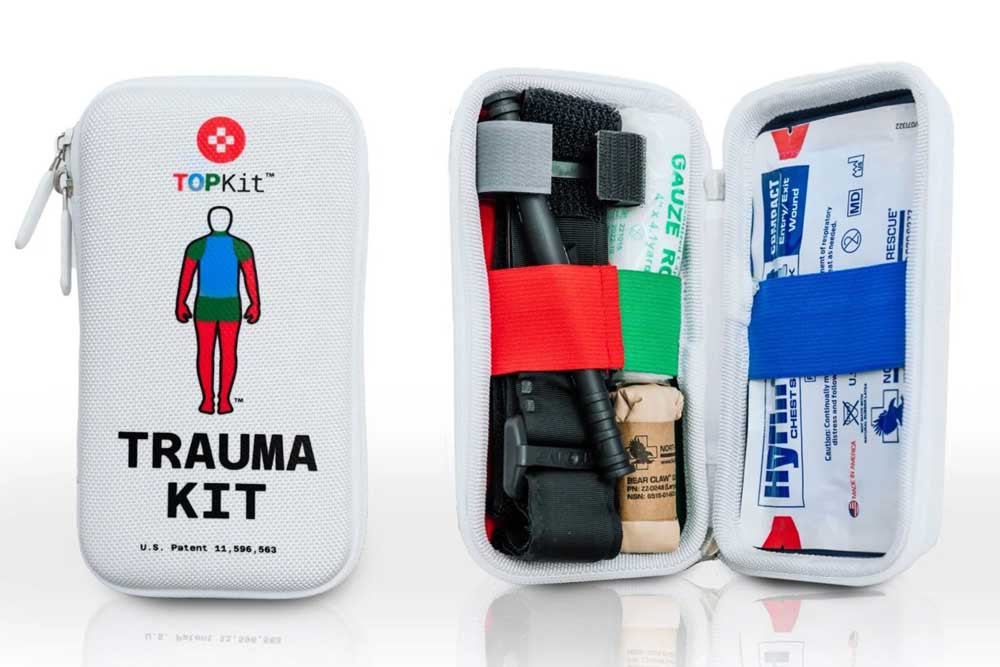
Image Courtesy of TopKit™.
What California Nonprofits Need to Know About AB 2260
California Assembly Bill 2260, signed into law on September 27, 2022 and effective January 1, 2023, establishes new safety requirements for certain newly constructed buildings with large occupancy capacities. Commonly referred to as the Tactical Response to Traumatic Injuries Act, AB 2260 mandates the installation of trauma kits in assembly, business, educational, factory, institutional, mercantile, and residential buildings (excluding single‑family and multifamily dwellings) that meet specified occupancy thresholds. The law also extends liability protections to individuals who use trauma kits in good faith during emergencies.
The purpose of AB 2260 is to enhance emergency preparedness and improve survival outcomes in situations involving traumatic injuries, particularly in high‑risk environments where large groups of people gather. By requiring trauma kits and aligning their contents with standards approved by local EMS medical directors, the legislation ensures that building operators are equipped to respond quickly to life‑threatening incidents.
Known as the “Tactical Response of Traumatic Injuries Act.”
- Requires certain newly constructed buildings (on or after January 1, 2023) with occupancy thresholds to be equipped with trauma kits.
- Assembly buildings with occupancy greater than 300.
- Business, educational, factory, institutional, mercantile, and residential buildings (excluding single‑family/multifamily dwellings) with occupancy of 200 or more.
- Trauma Kit Contents: Must include items such as tourniquets, bandages, and other emergency medical supplies approved by local EMS medical directors.
- Liability Protection: Extends Good Samaritan protections to individuals who use trauma kits in emergencies.
What Is a Trauma Kit?
A trauma kit goes beyond the standard bandages and antiseptic wipes found in a typical first aid kit. It is specifically designed to stop severe bleeding until professional medical help arrives.
Typical contents include:
- Tourniquets – to stop life-threatening limb bleeding
- Hemostatic gauze & bandages – to pack wounds and promote clotting
- Pressure dressings – to control bleeding from larger injuries
- Trauma shears – to cut clothing and access wounds quickly
- Gloves – to protect both responder and patient
- Instruction cards – often based on Stop the Bleed® guidelines
California’s AB 2260: Trauma Kits in Law
California took a groundbreaking step with AB 2260, requiring trauma bleeding control kits in certain newly constructed public and private buildings. The law recognizes that:
- 40% of trauma-related deaths worldwide are due to bleeding.
- Victims can die within minutes without intervention.
- Empowering bystanders with trauma kits saves lives in mass casualty events.
For nonprofits, churches, and schools, this means trauma kits are not just best practice, they may be a compliance requirement in new facilities.
Why Your Organization Should Have Trauma Kits
- Immediate Response: Seconds matter. Trauma kits allow trained staff or volunteers to act before EMS arrives.
- Community Trust: Demonstrates proactive care for congregants, students, or visitors.
- Risk Management: Reduces liability exposure by showing due diligence in safety planning.
- Training Opportunity: Programs like Stop the Bleed® provide simple, effective training for volunteers and staff.
Best Practices for Implementation
- Placement: Store kits in visible, accessible locations—near AEDs, entrances, and gathering spaces.
- Training: Ensure staff and volunteers know how to use tourniquets and gauze effectively.
- Maintenance: Regularly check expiration dates and restock supplies after use.
- Integration: Include trauma kit use in your emergency response plan and drills.
- Insurance Review: Confirm your liability coverage includes volunteer first aid response.
Conclusion
Trauma kits are more than compliance tools—they are life-saving resources that empower ordinary people to act in extraordinary moments. For nonprofits, churches, and schools, investing in trauma kits and training is a tangible way to protect your community and demonstrate care. Organization should consider trauma kits as essential safety equipment, alongside fire extinguishers and AEDs.
Trauma Kits vs. Standard First Aid Kits (AB 2260 Compliance)
| Category | Standard First Aid Kit | Trauma Kit (Hemorrhage Control) | AB 2260 Requirement (California) |
|---|---|---|---|
| Purpose | Treat minor injuries (cuts, scrapes, burns) | Stop life-threatening bleeding until EMS arrives | Mandates trauma kits in certain newly constructed public/private buildings |
| Core Contents | Band-aids, antiseptic wipes, adhesive tape, small scissors, gloves | Tourniquets, hemostatic gauze, pressure dressings, trauma shears, gloves, bleeding control instructions | Must include tourniquets, gauze, bandages, gloves, scissors, instructions from ACS/Red Cross/Stop the Bleed |
| Training Needed | Minimal (basic first aid) | Specific training in hemorrhage control (Stop the Bleed®) | Building staff/volunteers must be trained in kit use and maintenance |
| Impact on Survival | Limited to minor injuries | Directly reduces risk of death from uncontrolled bleeding | Recognizes bleeding as leading preventable cause of trauma death |
| Maintenance | Occasional restocking | Regular checks for expiration dates, readiness of tourniquets and gauze | Required maintenance protocols for compliance |
| Liability/Insurance | Basic coverage | Demonstrates proactive risk management; may reduce liability | Compliance strengthens defensibility in liability claims |
Action Steps for Boards & Leadership
- Assess Facilities: Determine if AB 2260 applies (new construction or renovations).
- Procure Trauma Kits: Ensure kits meet state-mandated contents.
- Train Volunteers/Staff: Partner with Stop the Bleed® or Red Cross for training.
- Integrate into Safety Plans: Add trauma kit use to emergency response protocols.
- Review Insurance Coverage: Confirm liability and accident coverage includes volunteer first aid response.
Trauma kits are not just compliance items, they are life-saving tools. AB 2260 sets a new standard in California, but every nonprofit, church, and school should consider trauma kits as essential equipment alongside AEDs and fire extinguishers.